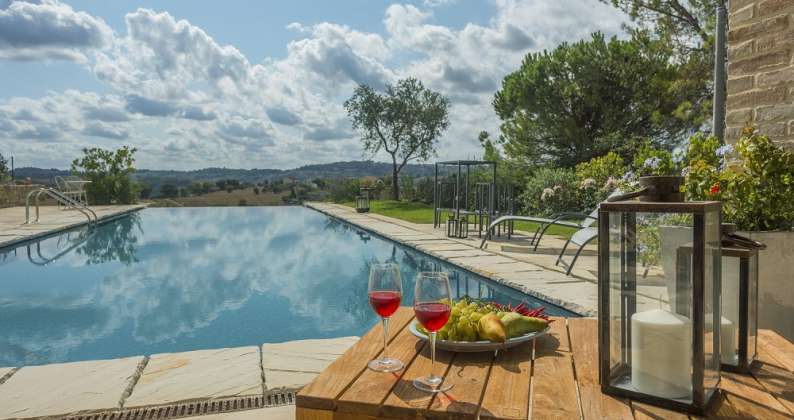
Having a pool in your garden is a dream that almost everyone cherishes at some point. A place to relax, have fun with family, host friends, and fully enjoy the best moments of summer. But when moving from dream to reality, it quickly becomes clear that there are many options, and choosing is not simple.
Available space, budget, house style, intended use, and desired aesthetic impact: every detail affects the final decision. Let’s clarify the main types of swimming pools, helping you identify the characteristics of each.
In-ground, Semi-inground, or Above-ground Pools:
The First Big Decision
The first decision concerns the pool structure. The three main families are in-ground, semi-inground, and above-ground pools. Each has precise characteristics and meets different needs.
In-ground Pool
This represents the most prestigious, durable, and customizable choice. It requires excavation and construction work but allows perfect integration with the garden and architectural context. It can be built using formwork, steel, or reinforced concrete. This solution is ideal for those seeking a high-level result, designed to last over time and also increase the property’s value.
Semi-inground Pool
It is perfect for sloped or uneven gardens, common in regions such as Marche, Umbria, and Abruzzo. It can also be built with formwork, steel, or reinforced concrete. This solution transforms a structural limitation into a strong aesthetic feature, creating levels, perspective effects, and visually impressive designs.
Above-ground Pool
This is the most economical and quickest to install, as it does not require excavation or major masonry work. It is a temporary or entry-level solution, suitable for those with a limited budget or who want a non-permanent installation, distinct from fully custom professional projects. This type of pool can be soft (PVC) or rigid (wood, rattan, etc.) depending on the material used.
Natural Pools and Bio-pools
Similar to small ecosystems, bio-pools use biological filters and aquatic plants to keep the water clean without chemicals. They create a natural corner directly in the garden, ideal for those who appreciate an eco-friendly approach. Natural pools, on the other hand, can be made from solidified sand, pebbles, or special resins and use filtration systems similar to standard pools. For a deeper dive into this topic, see our dedicated article.
The Heart of the Pool:
Skimmer or Overflow System?
One of the most important choices concerns the filtration system, which affects both aesthetics and pool performance.
Skimmer pools are the most traditional solution. Water is kept a few centimeters below the edge and is drawn in through openings called skimmers. It is a reliable technology, simpler, and generally more cost-effective.
Overflow pools represent the most elegant and technologically advanced solution. Water flows over the edge and is collected in a perimeter channel, creating a refined continuous mirror effect. This system provides superior visual impact, cleaner water through constant surface removal, and quieter operation. It is ideal for design projects, luxury villas, and high-end contexts, and is the hallmark of Professione Piscina’s projects.
Overflow Pools:
Beauty, Elegance, and Excellence
Overflow pools are true design works, created for those who value excellence, elegance, and attention to detail. Refined, scenic, and visually limitless, they are perfect for anyone looking for a unique and sophisticated pool capable of creating emotion.
They can be built with different types of overflow, each with specific technical and aesthetic features. For more details on the various types of overflow and their characteristics, you can visit the dedicated page on our website. dedicated page on our website.
Construction Materials:
The Structure of Your Pool
The material used to build the pool structure directly affects durability, quality, and customization.
Reinforced Concrete
Reinforced concrete is the most common choice for high-end custom pools. It allows maximum design freedom in terms of shape, size, depth, and finishes, enabling even complex and personalized designs. Its strength and durability make it a true long-term investment, ideal for those who want a pool built to last for decades without compromising quality.
Steel Panels
Steel panels provide a prefabricated modular solution, faster to install and lighter, while still offering good structural performance. They are technically reliable but limit customization compared to reinforced concrete and require careful planning to integrate aesthetically into the surroundings.
Fiberglass or Monoblock
Fiberglass, or monoblock, pools are prefabricated in a single piece. They are more economical and faster to install, ideal for those seeking reduced installation times. However, they have rigid limitations in shape, size, and depth, and may present transport and installation challenges, especially in complex or hilly locations.
Formwork
Formwork consists of modular elements used during reinforced concrete pool construction to shape the concrete. They can be permanent or removable, allowing precise geometry and customized architectural details. Proper use ensures perfect structural realization, pool robustness, and the possibility to integrate personalized design elements.
Shapes and Design:
From Classic Rectangular to Freeform
The pool’s shape strongly defines the character of the outdoor space.
Rectangular pools are a classic choice. Elegant, rational, and perfect for swimming and for those who love a timeless, essential style.
Oval or kidney-shaped pools introduce softer lines, ideal for creating a relaxing and harmonious atmosphere, perfect for natural gardens and green spaces.
Freeform pools represent the ultimate in customization. Thanks to reinforced concrete, unique projects can be realized that perfectly adapt to the terrain and create true garden paradises.
Choose Wisely, Rely on True Specialists
Choosing the right pool is an important investment. Relying on experienced professionals is essential to avoid surprises and achieve a result that meets expectations.
Since 1988, Professione Piscina has designed and built high-end overflow pools, turning clients’ dreams into concrete, functional, and aesthetically impeccable projects.
We are the reference point for unique overflow pool designs in Marche, Umbria, and Abruzzo. Our experience is at your service to study the perfect solution for your space, style, and needs.
Do you have an idea or need advice from those who have turned this passion into a profession? Contact us for a tailored consultation.