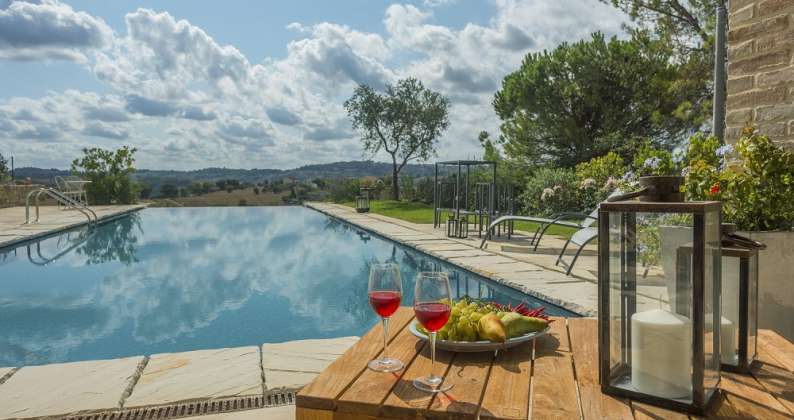
One of the most common questions from our clients is: “In winter, is it better to keep the pool closed or open?” The answer is not absolute, as it depends on several factors. In this article, we explain the advantages and disadvantages of both options so you can understand which solution is best for you.
Closed Pool
Advantages: zero energy consumption and minimal maintenance.
Disadvantages: the classic winter cover (a green tarp over the pool) is not very attractive and can fill with rain or snow. In these cases, it is necessary to remove excess water or snow from the cover to avoid problems.
When to choose this solution: especially recommended for pools in second homes or seasonal rental properties, or when the pool is not visible from the house. In these cases, it doesn’t make sense to keep it running all winter. It’s better to perform standard closing procedures and cover the pool with the tarp.
Cost consideration: even if there are no energy costs in winter, hiring a company to close the pool still incurs expenses.
Open Pool
Advantages: an open pool is more visually appealing, the movement and sound of the water bring life to the garden, and the presence of water helps prevent pipe damage from freezing.
Disadvantages: it requires some energy use and maintenance, such as cleaning the filter every 4–6 weeks and checking pH and chlorine levels about once a month.
When to choose this solution: recommended if the pool is near the house or in a spot visible from windows or the entrance. The same applies to hotels, B&Bs, and restaurants: if the pool is visible to the public, it is better to keep it open.
Cost consideration: winter maintenance for the 8 cold months costs about half of what is needed during the 4 summer months.
Winter Cover
There are different types of winter pool covers, each with specific features that protect the pool from rain, snow, and debris while minimizing maintenance during the cold months. Some are light and easy to remove, while others are more robust and durable, designed for those seeking complete and long-lasting protection. To discover all types of winter covers and learn how to choose the best one for your pool, read our dedicated article.
Expert Advice from Professione Piscina
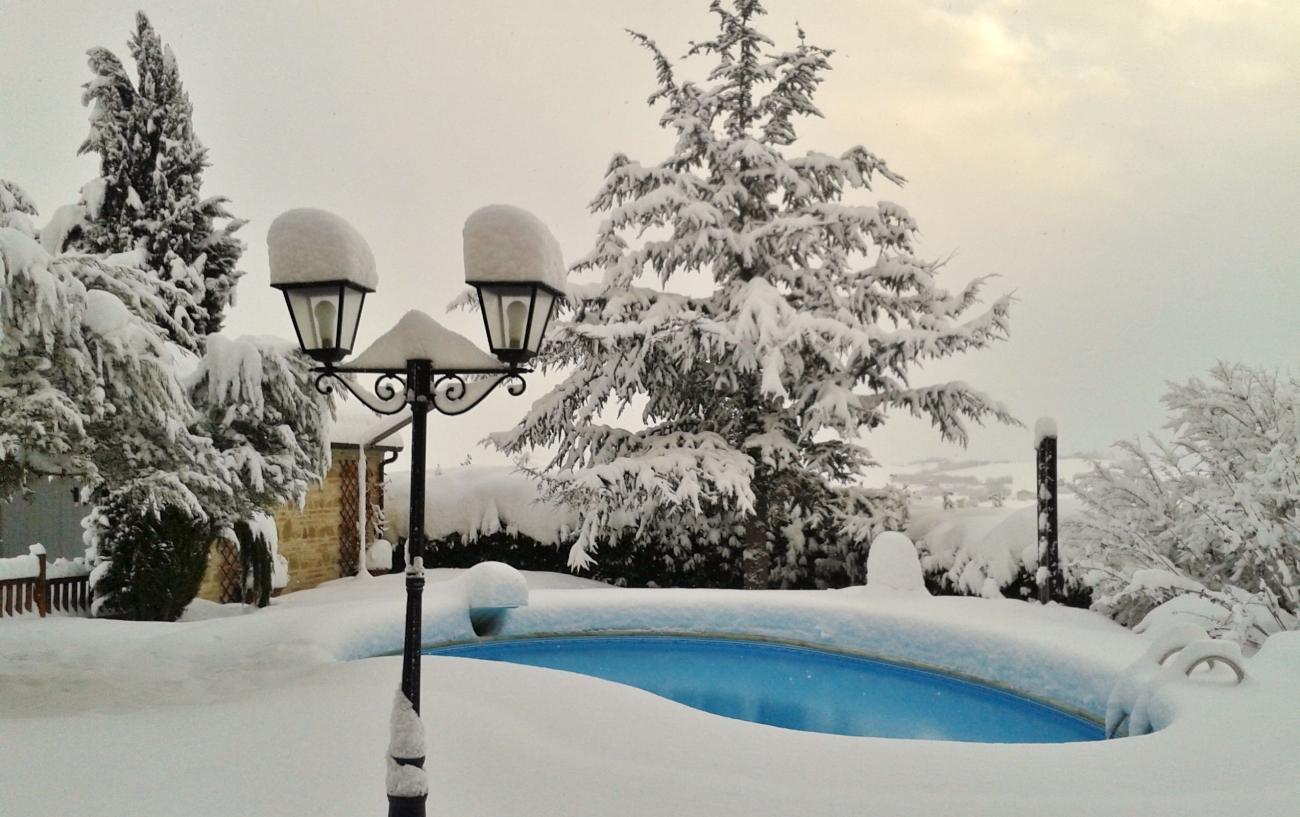
(In the photo, the pool of one of our clients in Treia - MC. Covered in snow, it is truly picturesque
and shows how even in winter the pool can become a charming feature in the garden).
At Professione Piscina, we specialize in high-end pools built in the Marche, Umbria, and Abruzzo regions. Whenever possible, we always recommend keeping the pool open even in winter, especially if it is part of a regularly inhabited home or visited during the cold season.
A pool visible from living room windows or the entrance becomes a real design element: it adds beauty and charm to the garden and the home, and becomes particularly striking when covered with snow. It should never be hidden or covered from view.
If maintained at a minimal regime, an open pool does not consume much energy, while adding an elegant and magical touch to the entire outdoor space. Almost all of our clients, except those who spend the winter abroad, have followed this advice and kept their pool open even during winter, preserving the charm of the water feature in the garden even in the coldest season.