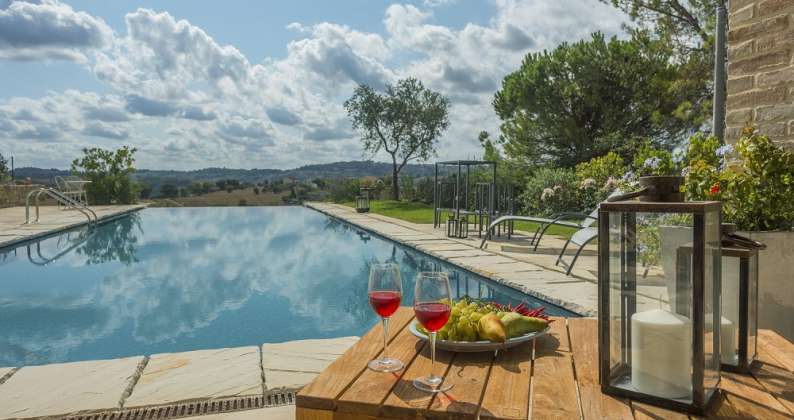
Roman steps are a classic feature that shaped pools until the late 1990s. Over the decades, they have been among the most popular choices for anyone seeking an elegant and functional pool, as they act as a decorative element along the pool perimeter.
They do not take up space in the center of the pool, allow easy and comfortable access to the water, and can become a true focal point of the project.
Today, even though more modern solutions have emerged, Roman steps still hold their charm, especially for those planning a skimmer pool.
Advantages of Roman Steps
Compared to traditional steel ladders, Roman steps offer several advantages that make them an attractive choice even today:
- gradual and safe entry into the water, ideal for children and people with reduced mobility
- possibility of using them as a relaxation area if the first step is made wider
- aesthetic impact that enhances the entire pool environment
Types of Roman Steps
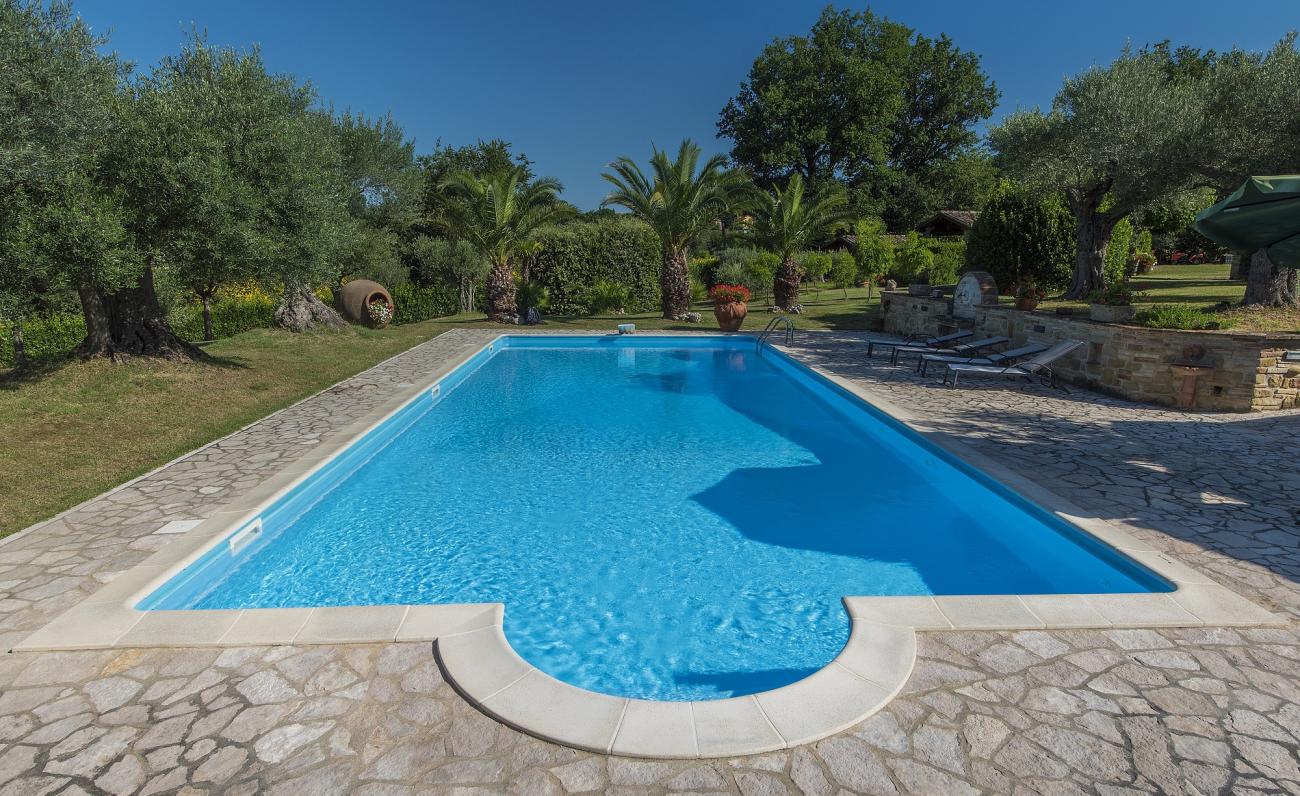
The choice of Roman steps also depends on the type of installation and the materials:
Integrated or Monoblock Roman Steps
This is the most common solution in newly built pools. It consists of a fiberglass structure installed before the final finish (PVC liner or reinforced membrane). This type is commonly offered by other pool suppliers.
Prefabricated Acrylic Roman Steps
This is a pre-finished module installed directly into the pool. It is ready to use but offers less customization compared to other solutions.
Masonry Roman Steps
The steps are custom-built along with the pool structure and can be covered with the same material as the pool, ensuring perfect aesthetic integration. It offers maximum freedom in shape, size, and finishes, making it a central feature of the project.
How to Choose the Right Roman Steps for Your Pool
Pool Size and Shape
The steps should be proportionate to the pool. Large pools can accommodate more imposing steps, while smaller pools benefit from a more compact solution to preserve usable space.
Materials and Finishes
For luxury infinity pools, masonry steps covered in mosaic, stone, or the same liner as the pool are ideal. Fiberglass is a more versatile option, suitable for different contexts, while still delivering a polished aesthetic result.
Depth and Number of Steps
The pool’s depth affects the number of steps required. Careful planning ensures comfortable and safe access.
Project Style
It is important that the steps integrate with the overall style of the garden and the house, whether modern, classic, or rustic. The choice of shape, materials, and finishes should harmonize with the surrounding environment.
Is a Roman Step Right for a High-End Pool?
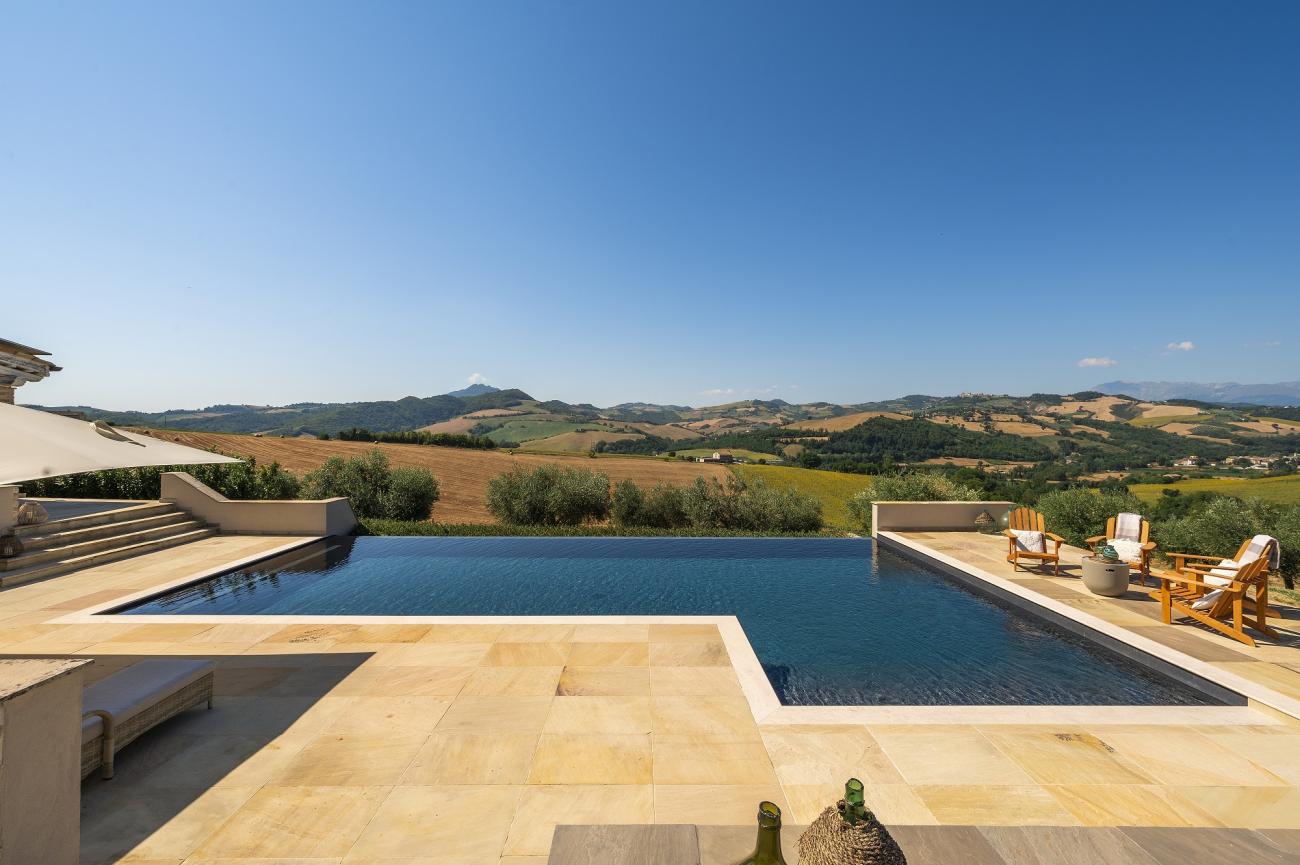
The classic design of Roman steps today rarely fits a luxury pool or a project with modern and elegant taste. Soft, rounded lines, once a symbol of exclusivity, are increasingly replaced by clean, essential, and tailor-made shapes that can interact harmoniously with contemporary architecture and the surrounding landscape.
When a client wants to create an entry outside the pool perimeter, the choice almost always falls on an L-shaped staircase. This is an extremely versatile solution, which can be wider or longer, with or without an integrated beach area, and enhanced with customized details. The goal is to create a comfortable, elegant entry perfectly consistent with the pool’s style, without sacrificing functionality.
For those who want to truly stand out, the trend is to opt for fully custom entrances, designed around the client’s needs and preferences. Original shapes, unique geometries, integrated seating, submerged relaxation areas: every detail is carefully planned to create a unique entry, turning the steps into a real design element, not just functional but also visually striking.
In a high-end pool, the steps are no longer just a point of access, but a fundamental part of the project, able to express style, a sense of well-being, and a way of experiencing the pool tailored to the user.
Installation of the Steps: A Job for Professionals
Installing a custom step, especially if integrated or in masonry, requires precision and expertise. The main phases include positioning the structure, connecting it to the pool, waterproofing (particularly delicate around the steps), and applying the final finish.
An unprofessional installation can lead to water leaks, structural problems, and compromised aesthetics. Relying on experts ensures a step perfectly integrated into the overall project. Professione Piscina, active since 1988, carries out installations with meticulous attention to detail, leaving nothing to chance.
Maintenance and Safety of the Steps
Cleaning
It is important to keep the steps clean from algae and debris, especially in corners and joints, which are the most delicate areas for dirt accumulation.
Safety
To ensure maximum safety, it is advisable to use anti-slip materials or finishes on the steps. Anti-slip solutions can also be integrated during the design phase for a long-lasting and effective result.
Create an Elegant and Functional Pool, Starting with the Entry
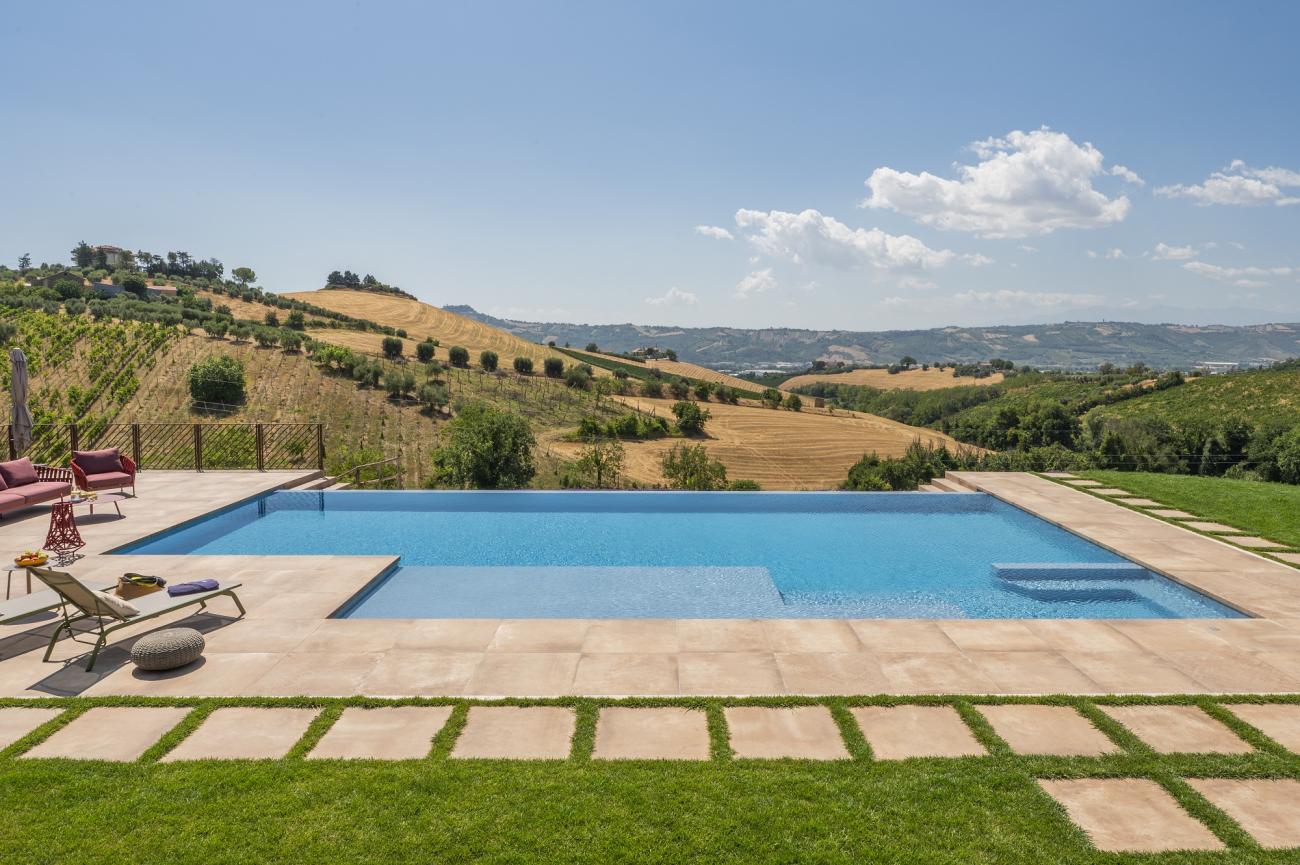
A set of steps can transform your pool, but only if it is carefully designed and expertly built. Rely on the experience of Professione Piscina to create a tailor-made solution that integrates perfectly with your infinity pool and the style of your home. If you are planning your own relaxing oasis in Marche, Umbria, or Abruzzo, we are the ideal partner to turn your vision into reality.
Contact us for a personalized consultation!