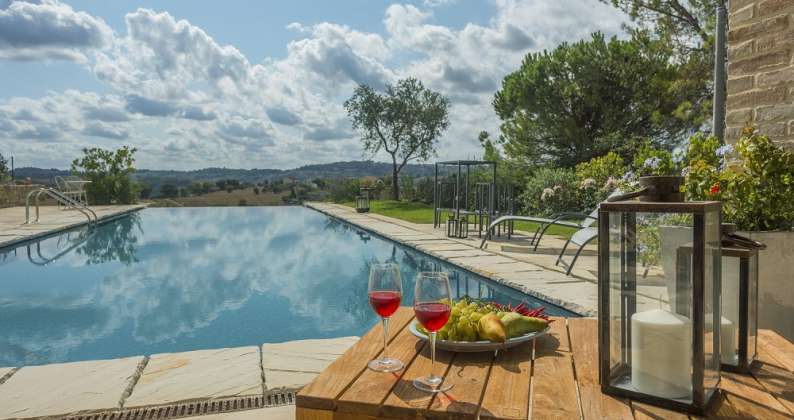
The filtration system is the beating heart of every pool. It is responsible for about 80% of water cleaning, far more than chemical products alone can achieve. A well-designed system ensures not only crystal-clear and safe water for users but also protects the investment over time, reducing energy consumption, maintenance costs, and component wear.
It is precisely on this vision of quality and durability that the experience of Professione Piscina is based, active since 1988 in designing and building pools whose value remains unchanged over the years thanks to impeccable system planning.
Recirculation System and Filtration System: Let’s Clarify
The terms “recirculation” and “filtration” are often used interchangeably, but in reality, they refer to two distinct systems that work in perfect synergy.
The recirculation system is responsible for drawing water from the pool and directing it to the technical system. The filtration system, on the other hand, is responsible for the actual purification of the water before it is returned to the pool.
The main types of recirculation systems are two:
RECIRCULATION WITH SKIMMER
This is the most traditional and widespread system. Water is drawn through special slots (skimmers) located at the top of the pool walls. It is a functional and effective solution, but less aesthetically pleasing, as the water level remains noticeably lower than the pool edge.
OVERFLOW RECIRCULATION
This represents the aesthetically superior and technically more efficient solution, and is one of Professione Piscina’s specialties. Water elegantly overflows along the entire pool perimeter, is collected in an overflow channel, and directed to the compensating tank (if present) and then to the filter. The result is a refined mirror-like effect and a more uniform cleaning of the water surface, where most impurities tend to accumulate.
The Essential Components of a Filtration System
A filtration system is not just a collection of individual products, but an integrated system in which each component must be properly sized and coordinated.
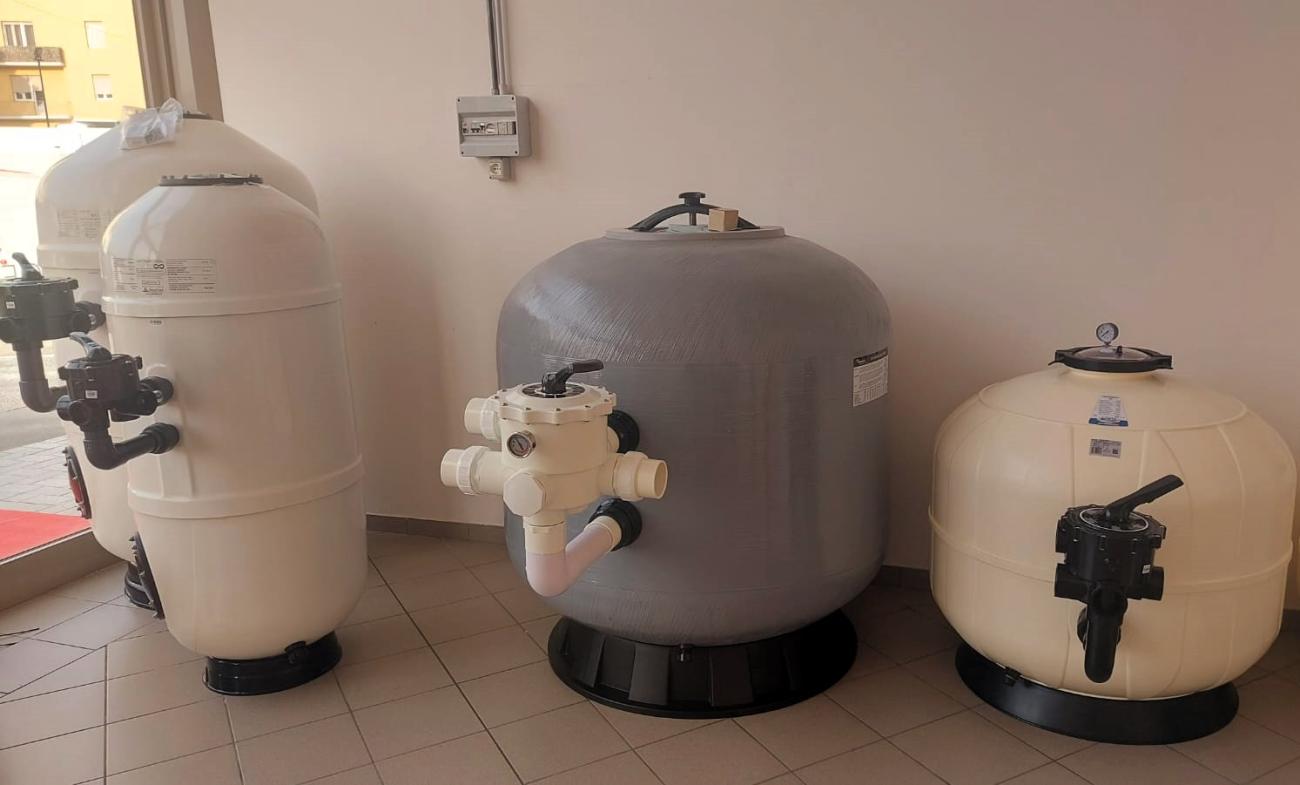
THE PUMP
It is the engine of the system: it draws water from the pool and pushes it toward the filter. Choosing the right pump is crucial and must be based on the correct flow rate (m³/h) relative to the pool’s water volume, ensuring a complete circulation in optimal time. The pump’s built-in prefilter captures larger debris, protecting the filter and improving overall efficiency.
THE FILTER
It is the actual water purifier. The main types are:
- Sand filter: the most common type. Water passes through a bed of quartz sand that traps impurities. For more modern and high-performance solutions, filter glass is used, offering greater filtering capacity and improved hygiene.
- Cartridge filter: suitable for smaller pools or spas. It requires periodic cleaning or replacement of the cartridge.
- Diatomaceous filter: ensures very fine filtration and water clarity, but presents several challenges for cleaning and maintenance.
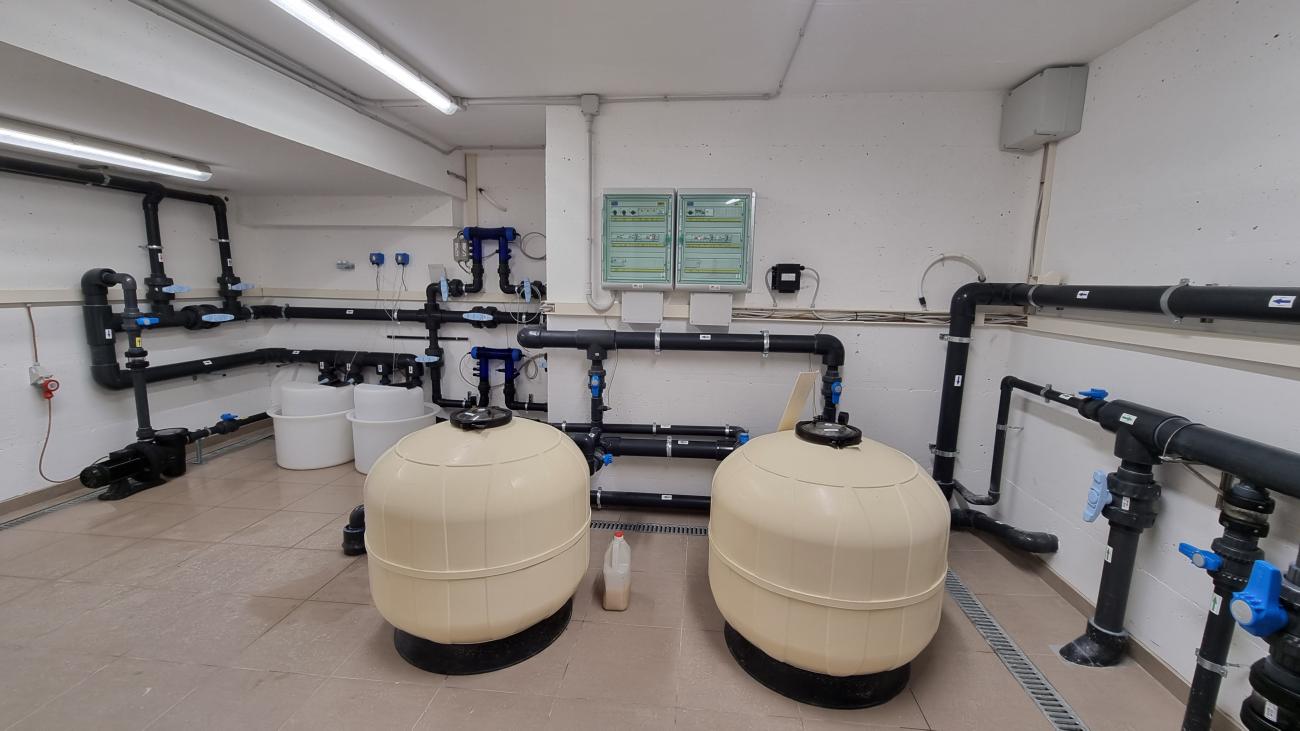
PIPING AND THE TECHNICAL ROOM
The quality of materials and the correct sizing of the pipes are crucial to avoid pressure losses and ensure system efficiency. The technical room is the true “engine room” of the pool: it houses and protects all components. A well-planned layout and adequate accessibility are hallmarks of professional workmanship. For this reason, at Professione Piscina, we always recommend building technical rooms of sufficient size and easily accessible, to facilitate any future maintenance or interventions.
Proper Sizing: The Secret to Effective Filtration
There is no standard solution that fits all pools. Sizing a filtration system is a complex technical task that depends on numerous factors: the water volume, the type of pool (an overflow pool has different requirements compared to a skimmer pool), the intended use, and the surrounding environment, such as the presence of trees or dust.
Only professional design can ensure a perfectly balanced system, avoiding both undersizing—which results in poor water quality—and oversizing, which leads to unnecessary costs and inefficiencies.
Filtration System Maintenance:
Simple Rules for a Long Life
Proper routine maintenance helps preserve the efficiency of the filtration system over time. Here is a simple checklist of essential tasks:
-
Regularly check and clean the pump’s prefilter basket.
-
Monitor the pressure indicated by the filter’s manometer.
-
Perform a backwash of the sand filter when the pressure rises: this process reverses the water flow to clean the filter media.
-
Periodically clean the cartridges in cartridge filters, following the manufacturer’s instructions.
Innovation in Filtration for Overflow Pools
In the world of overflow pools, innovation plays a key role. The most advanced systems integrate automated management technologies capable of adjusting filtration cycles based on actual pool usage, optimizing energy consumption.
Another distinctive element is the use of next-generation filter media, such as activated glass, which provides superior filtration and reduced bacterial growth compared to traditional sand. These solutions fit perfectly within the concept of a luxury pool: elegant, sustainable, and easy to manage.
Let’s Design Your Pool Filtration System Together
Since 1988, at Professione Piscina we have been designing and building overflow pools where every detail, starting from the invisible heart of the pool filtration system, is carefully planned to ensure beauty, safety, and long-lasting peace of mind. A well-designed pool filtration system is what truly makes the difference between an ordinary pool and a perfectly maintained wellness oasis.
Experience, planning vision, and a deep knowledge of swimming pool filtration systems are required.
If you are thinking of building your pool in Marche, Umbria, or Abruzzo, don’t leave its most important component to chance. Contact us for a personalized consultation: together we will analyze your needs and design an efficient, durable, and perfectly integrated pool filtration system.