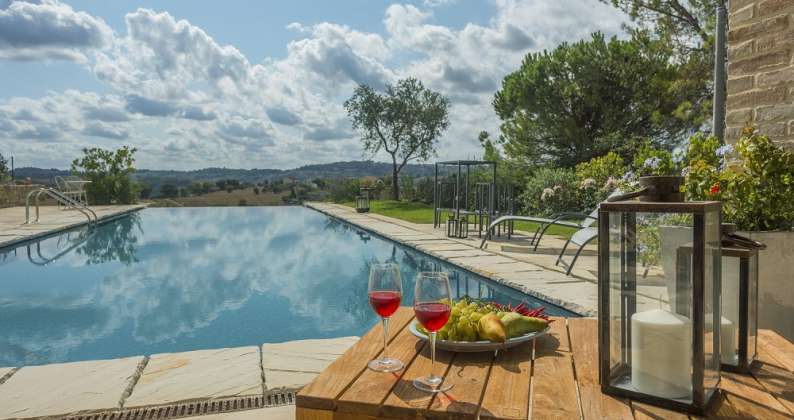
Choosing the pool edges in natural stone is not just an aesthetic choice. It is a decision that defines the style, value, and quality of the entire outdoor area. The edge guides the eye, welcomes every step, and interacts with the garden and the architecture of the house, transforming the pool into a true wellness space.
Elegant, durable, and safe, the pool edges in stone represent a timeless solution, capable of enhancing any project, from the most classic to the most contemporary.
The types of stone most suitable for pool edges
Each stone has a distinct personality. Understanding it means creating a cohesive, harmonious, and long-lasting design.
TRAVERTINE
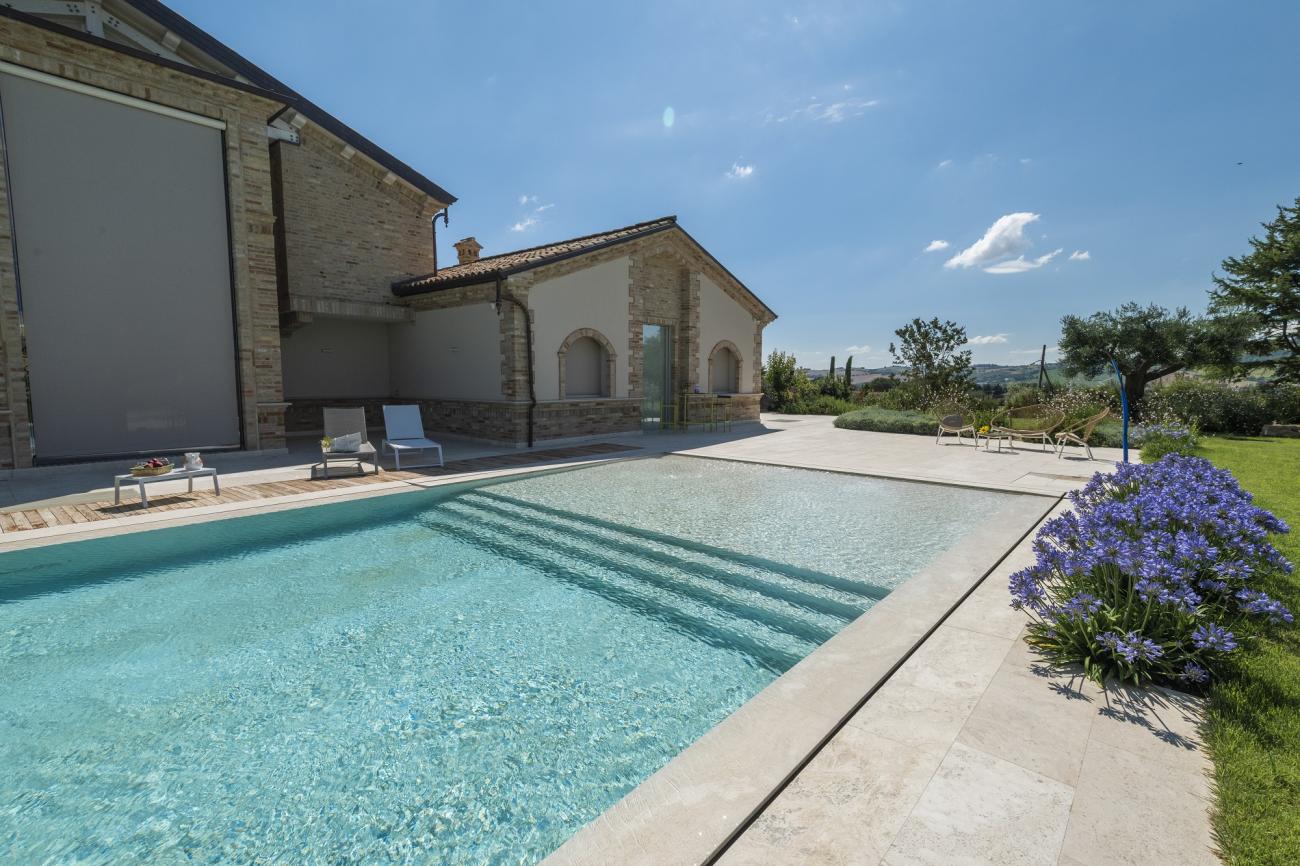
Travertine is one of the most appreciated solutions for pool edges in natural stone. Its warm and luminous tones, combined with light veining, create refined and welcoming environments. It is resistant to frost, pleasant to the touch, and maintains a comfortable temperature even under the sun. Perfect for elegant, modern, and luxury pools.
PIETRA SERENA
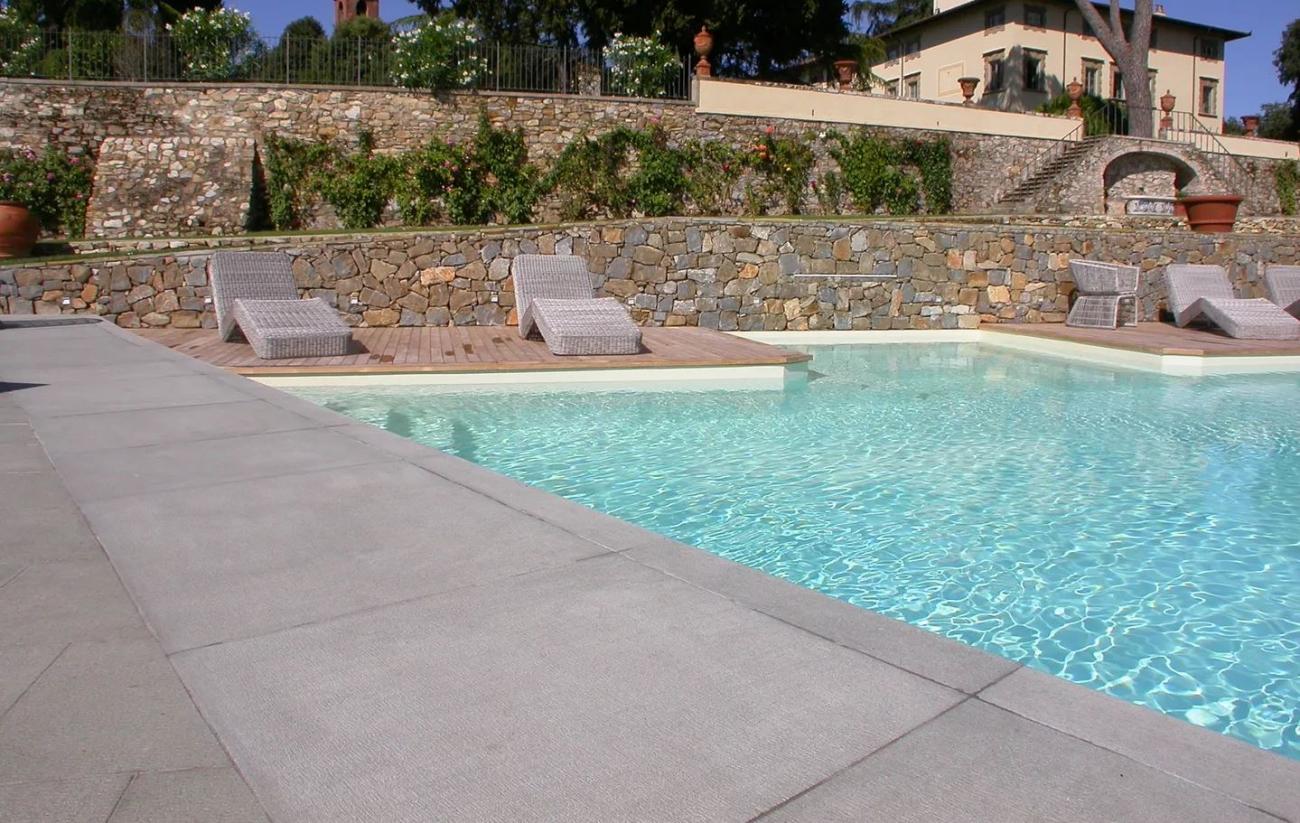
Pietra Serena is a natural sandstone from Tuscany, characterized by a uniform gray color and a compact texture. It gives pools a contemporary, clean, and minimal look. It is resistant to weather, chlorine, and wear, making it ideal for modern, minimal, and design-focused pools (photo by Homify).
LOCAL STONES FROM MARCHE, UMBRIA, AND ABRUZZO
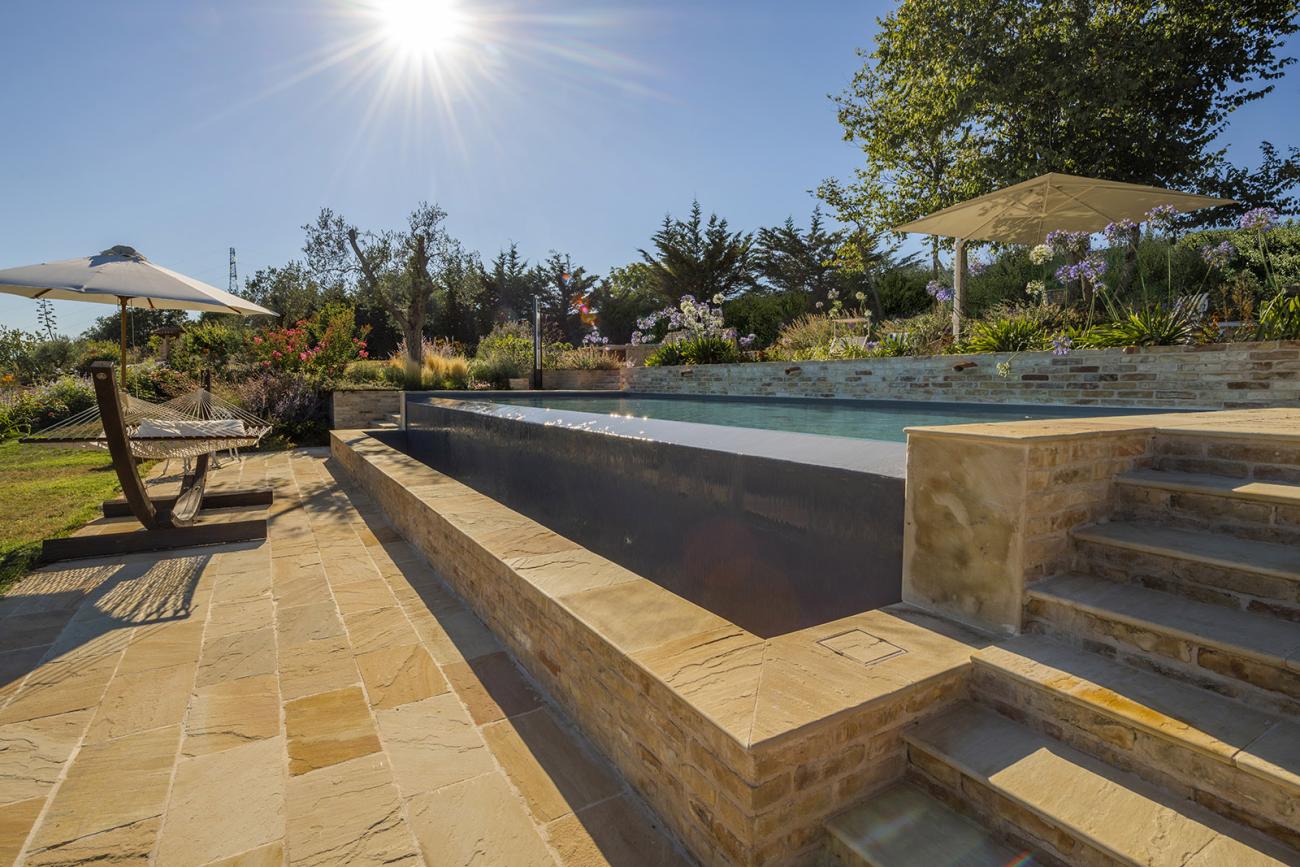
Local natural stones represent a choice of great aesthetic and territorial value. Sandstones from Marche, limestones from Umbria, and travertines from Abruzzo allow the creation of pool edges perfectly integrated into the landscape, offering authenticity, harmony, and a touch of exclusivity. Their naturalness blends perfectly with the surrounding greenery and the architectural materials of the house, creating a visual continuity that enhances every detail of the project. Moreover, choosing local stones ensures resistance, durability, and an aesthetic result that improves over time, giving the pool a unique and recognizable character.
NATURAL STONE AND RECONSTITUTED STONE: DIFFERENCES
-
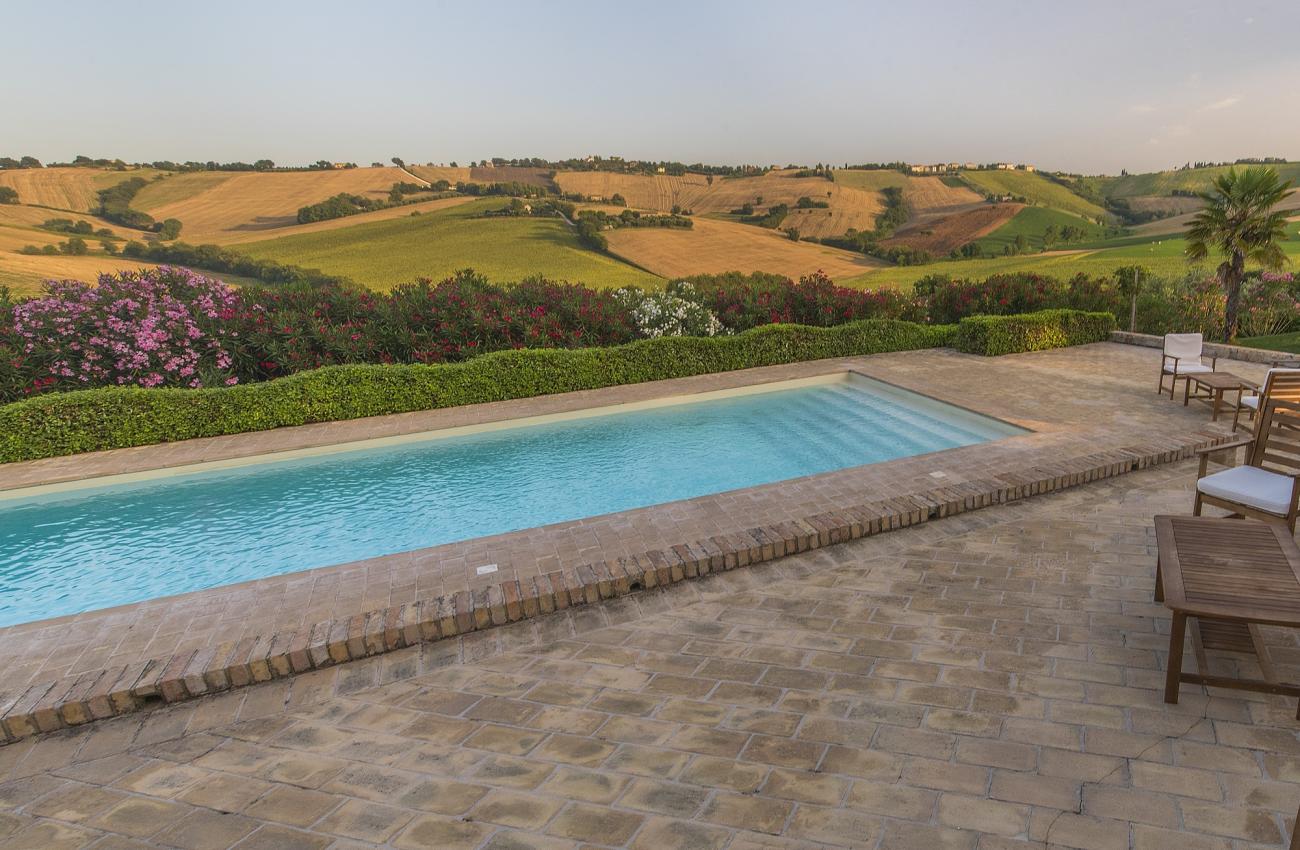
Natural stone offers uniqueness, authentic beauty, and long durability.
-
Reconstituted stone guarantees color uniformity, lower costs, and good resistance. Both represent valid solutions, but natural stone remains the ideal choice for those seeking a superior, high-end result.
Not just aesthetics: safety and functionality of pool edges
A pool edge must be beautiful, but above all, safe. Anti-slip finishes, such as bush hammering and sandblasting, ensure stability even when wet, increasing comfort and reducing the risk of slipping.
Pool edges in stone are also designed to withstand chlorine, UV rays, weathering, and wear, offering a long-lasting and reliable investment.
How to match pool edges in stone
with the style of the pool and the garden
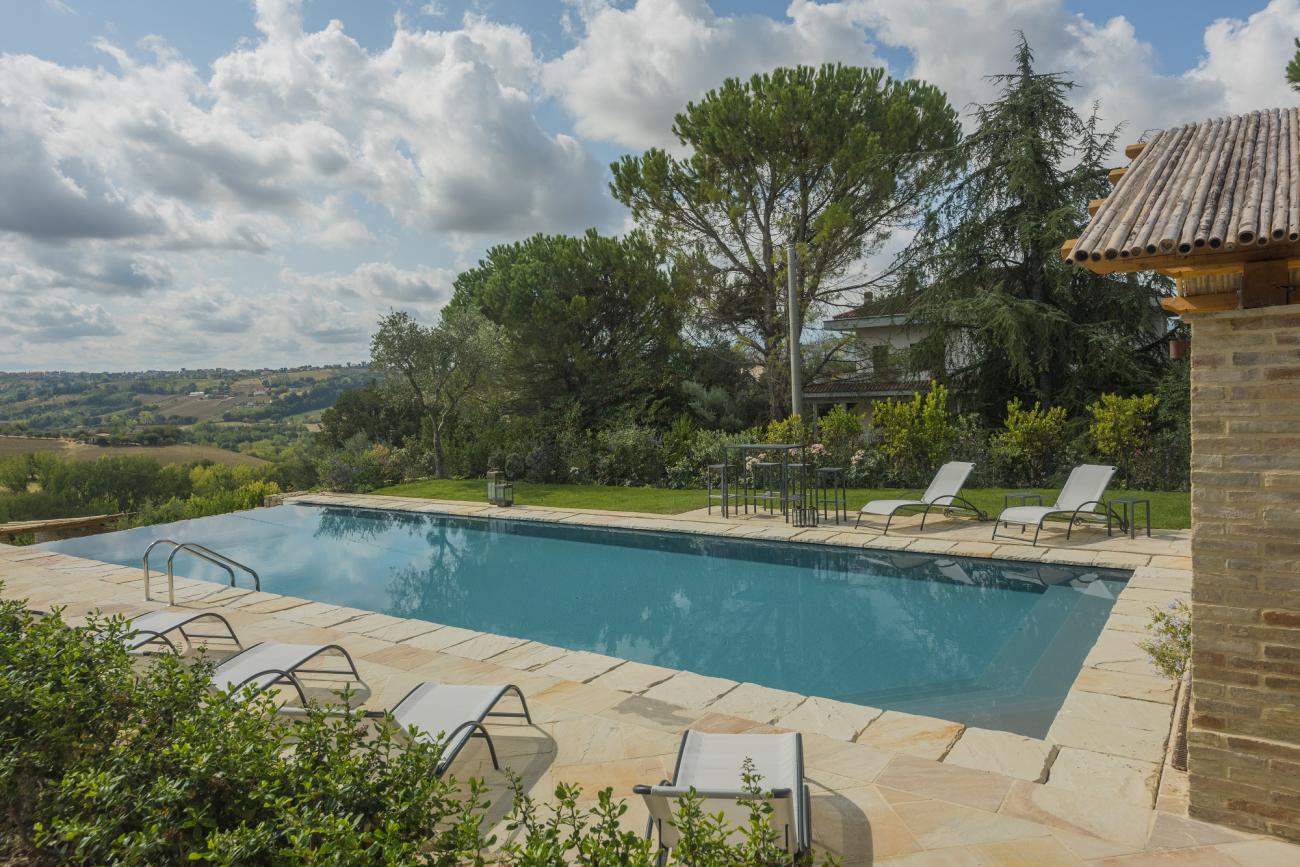
The pool edge represents the connection point between water, architecture, and landscape. A thoughtful design allows for visual continuity, color harmony, and stylistic coherence, transforming the pool into an integral part of the outdoor space.
The continuity between edge and solarium area
Today, the pool edge as a separate element is gradually giving way to a more evolved vision. Increasingly often, a visual and material continuity is created between the edge and the surrounding walkable surface, forming a single harmonious area that envelops the pool.
The edge thus becomes an integral part of the solarium area, enhancing the overall elegance of the space. Using the same material for the entire area around the pool creates a clean, modern, and refined effect, capable of amplifying the perception of space.
To visually highlight the pool’s perimeter, it is possible to lay the slabs in a different direction compared to the rest of the surface, while maintaining the same material. This is a subtle solution that accentuates the perimeter without interrupting the overall harmony.
Stone edges and overflow pools
In overflow pools, the edge plays a central role. Precise design allows water to flow naturally, creating the famous mirror effect. In this context, the choice of materials, finishes, and installation becomes essential to achieve a dramatic and fully functional result. The edge must harmonize with the rest of the paving and the garden, ensuring safety, comfort, and visual continuity.
The correct slope, anti-slip finishing, and attention to detail allow the water to reflect evenly, enhancing the sense of space and making the pool a true design feature.
Colors and combinations
Light tones highlight the water’s brightness and create relaxing atmospheres. Darker colors add character and visual depth. Matching the edge with the interior pool lining can create soft harmonies or bold contrasts, making each pool unique.
Maintenance and cleaning of stone pool edges
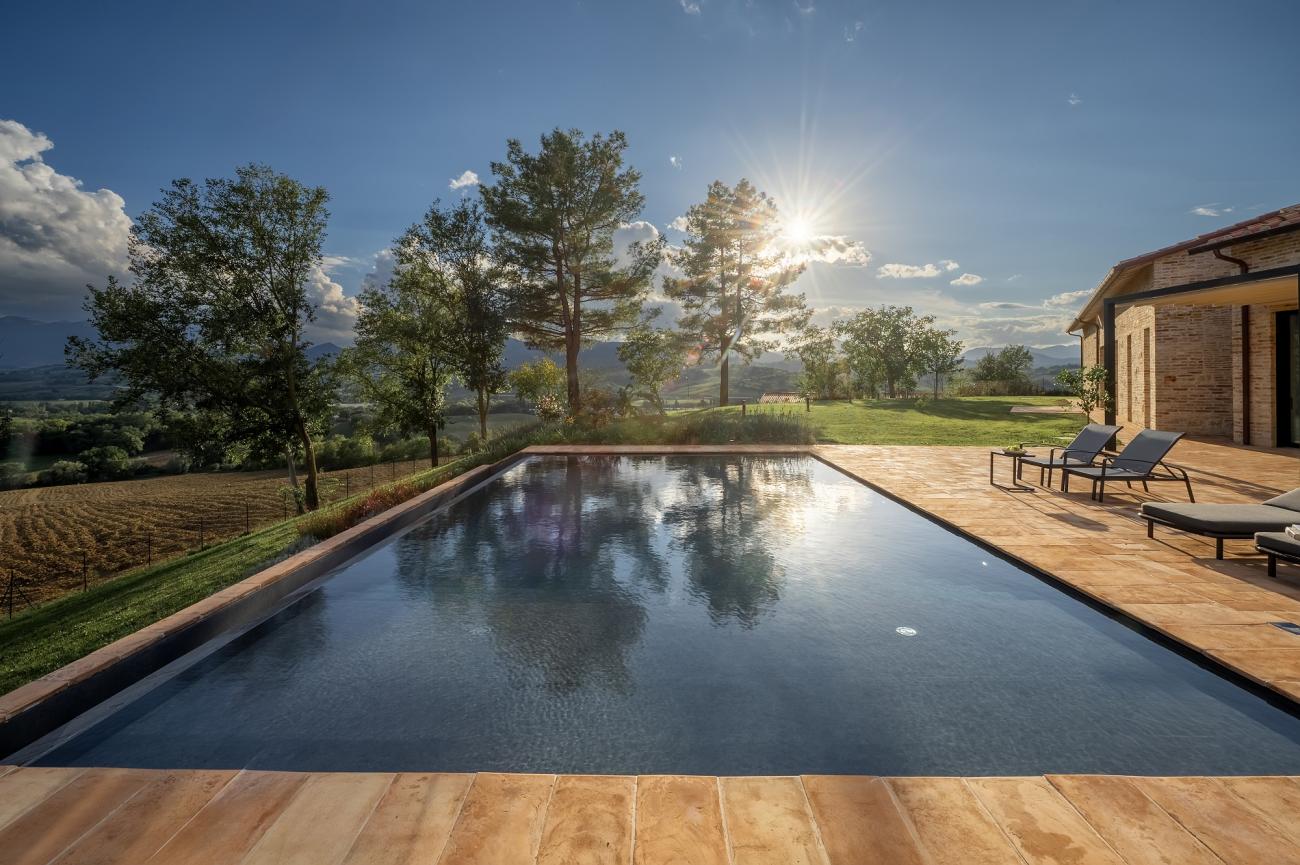
Maintenance of stone pool edges is simple.
Regular cleaning with water and neutral detergents is sufficient to keep the surfaces beautiful and safe.
Applying water- and oil-repellent protective treatments preserves the stone over time, makes cleaning easier, and maintains its aesthetic quality.
The importance of professional installation:
why rely on true experts
The final quality of pool edges depends critically on proper installation. Only a careful execution ensures safety, durability, and impeccable aesthetics.
Professione Piscina, with 40 years of experience, operates in the Marche, Umbria, and Abruzzo regions, offering tailored design and specialized installation for high-end overflow pools. A complete service that transforms every pool into a truly exclusive project.
Have you dreamed of a pool with elegant natural stone edges, perfectly integrated into your garden? Now is the time to take action.
Contact us for a personalized consultation. Our team will guide you in choosing the perfect finishes to create a pool of unique charm, fully tailored to you.