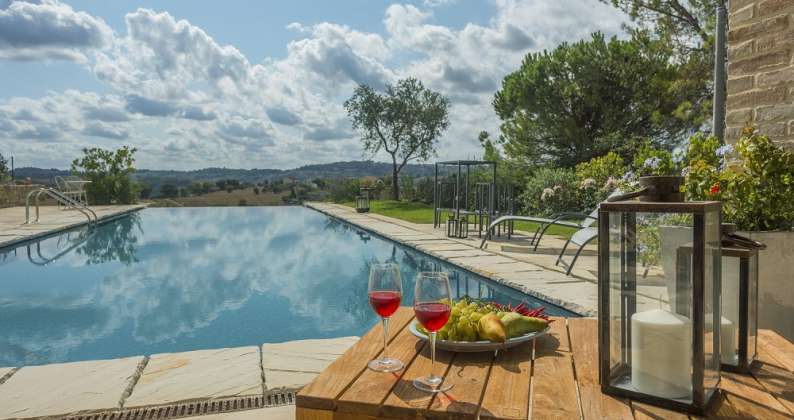
Designing an overflow pool means transforming your outdoor space into an oasis where aesthetics, comfort and functionality come together.
It’s not just about choosing a type of overflow; it involves planning every detail: shape, dimensions, materials, systems and accessories. This approach ensures crystal-clear water, simplified maintenance, and a visual effect that harmonizes with the surrounding landscape.
Since 1988, Professione Piscina has been creating custom overflow pools in Marche, Umbria and Abruzzo, combining technical expertise with bespoke design.
What Is an Overflow Pool and Why Planning Is Essential
An overflow pool is defined by a rim where water gently spills over, collected into a perimeter channel and then into the compensation tank. This system not only creates an elegant visual impact but also keeps the surface clean and the water quality consistently high.
What truly sets an overflow pool apart is the precision required in planning. The edge must be perfectly uniform to spill continuously and remain so over time, preserving the scenic effect and elegance of the pool. Achieving this result requires early planning and careful evaluation of all project elements: the terrain and slope, orientation and sun exposure, panoramic views, and integration with the surrounding landscape.
The choice of accessories, finishes and materials must also be carefully planned. Lighting, hydromassage systems, counter-current swimming, edges and external paving must be coordinated with the chosen type of overflow and the overall pool style, ensuring aesthetic harmony and functionality.
In short, designing an overflow pool means thinking long-term: not just creating a beautiful and functional pool at the time of installation, but ensuring it maintains its elegance and the continuity of the overflow edge over time. Only the combination of experience, technical skill and careful planning achieves this perfect balance.
Advantages of Custom Planning for Your Overflow Pool
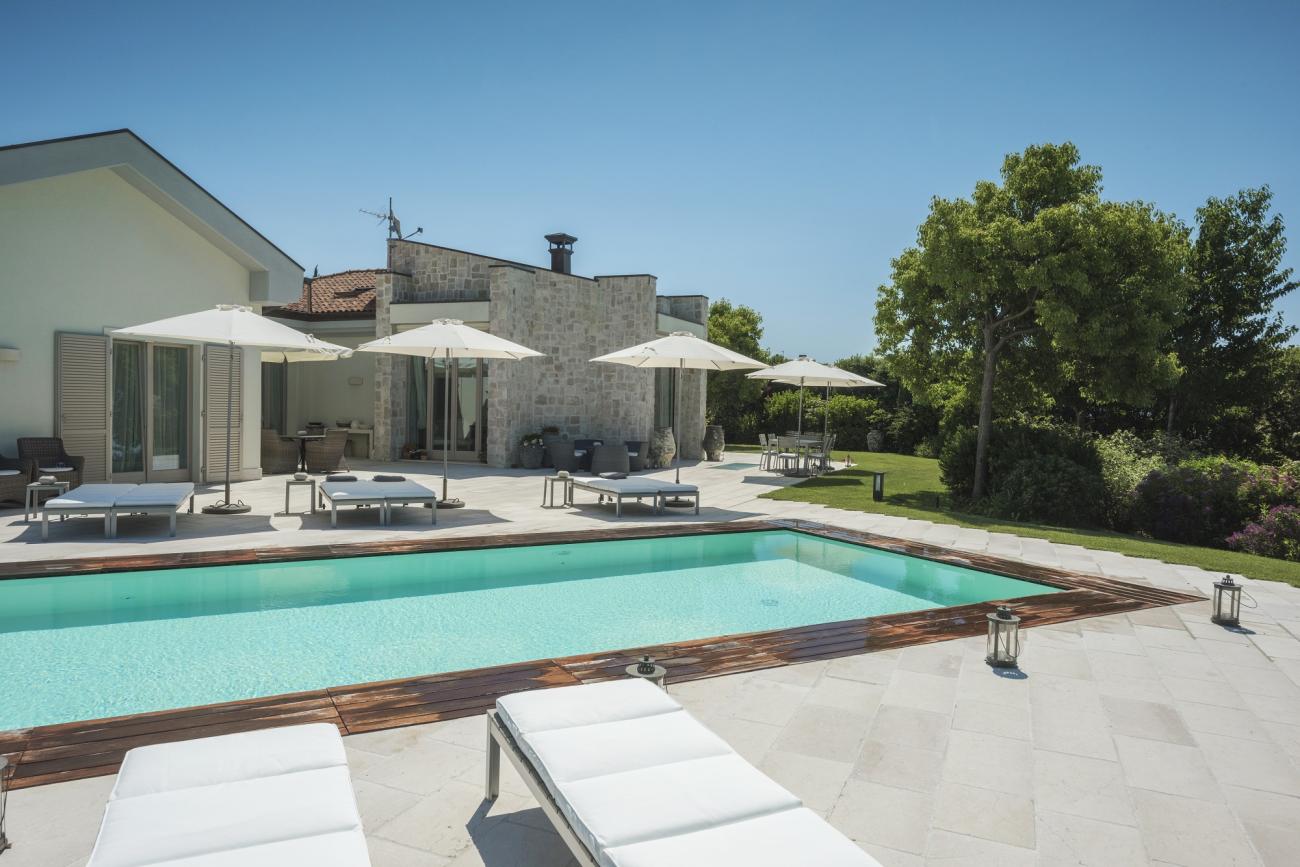
A custom plan provides tangible benefits in both aesthetics and pool functionality:
-
Optimal aesthetic impact: the pool integrates harmoniously with the landscape, enhancing hills, sea views, or urban contexts, creating a lasting scenic effect.
-
Consistently high water quality: the overflow system ensures constant surface cleaning, preventing buildup and keeping the water crystal-clear.
-
Total customization: every aspect of the pool, from shape and depth to materials, edges and accessories, can be designed in detail to meet your needs and desired style.
-
Property enhancement: a well-planned overflow pool increases property value, combining beauty, functionality and long-term durability.
Custom planning is particularly important for overflow pools, where the edge must spill uniformly and maintain the visual continuity for many years. Each phase is adapted to the local context, considering sun exposure, ventilation, terrain and panoramic views, especially in Marche, Umbria and Abruzzo, where the landscape features valleys, hills and natural slopes.
Types of Overflow: Which to Choose for Your Project
Overflow pools can take different forms and styles, each with unique characteristics:
-
Infinity overflow: water spills over one or more sides, creating a visual effect of continuity with the horizon.
-
Hidden or under-edge overflow: the pool edge is integrated, and water flows without visible elements, for a clean and elegant design.
-
Slot overflow: a thin perimeter opening allows water to spill, offering a minimalist and contemporary effect.
-
Grated overflow: water spills along the entire perimeter and is collected by a channel covered with a grille, combining aesthetics and functionality.
-
Cascade or raised overflow: water flows over a slightly raised edge, creating a scenic and dynamic effect.
It is also possible to combine multiple types of overflow to create complex, customized projects. For more details, you can consult our dedicated overflow pool page.
Design Phases of an Overflow Pool: From Consultation to Final Project
The design process is structured to ensure flawless results:
Initial Consultation and Site Inspection
The first meeting helps understand the client’s tastes, needs and lifestyle. The site inspection analyzes sun exposure, slope, soil type and landscape constraints. This phase is key to optimizing pool position, depth and orientation.
Feasibility Study and Preliminary Project
Early drafts are developed, defining the pool’s shape, size and placement to maximize context and panoramic views.
Bureaucratic Procedures and Permits
Every project requires municipal authorizations and urban planning checks. Professione Piscina provides guidance to simplify this complex phase. For more details, you can consult our article on administrative permits.
Final Project and Structural Calculations
This phase defines all technical details: reinforced concrete calculations, system sizing, piping layouts, construction details and filtration systems. This transforms the idea into a project ready for construction.
Materials and Customization: How to Make Your Pool Unique
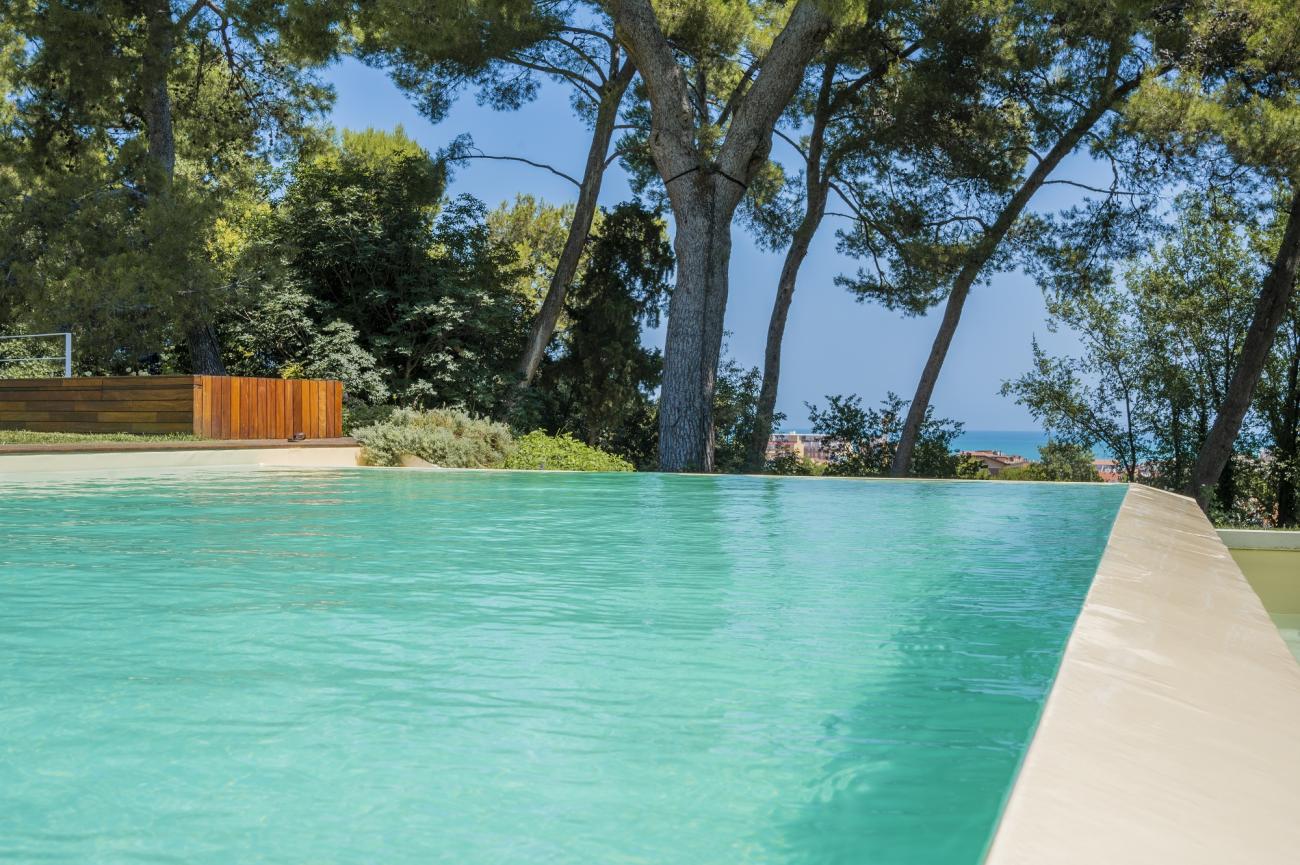
Material choices define the pool’s character and determine durability and maintenance:
-
Structure: reinforced concrete for strength and freedom of shape, ideal for any type of overflow.
-
Interior finishes: reinforced PVC, glass mosaic or porcelain stoneware with stone or sand-effect textures. Learn more in our article on finishes and coatings.
-
Edges and external paving: natural stone, porcelain or high-quality composite wood WPC, slip-resistant and coordinated with the pool style, each with its unique characteristics.
-
Accessories: LED lighting, hydromassage, counter-current swimming and heating systems complete the experience.
How Much Does It Cost to Design and Build an Overflow Pool?
The cost depends on many factors: size, shape, complexity of the overflow system, materials, accessories, and site conditions. An overflow pool is a long-term investment: the quality of planning and materials justifies a higher initial cost compared to standard solutions, ensuring beauty and functionality over time. Learn more in our article on overflow pool costs.
Your Custom Overflow Pool in Marche, Umbria and Abruzzo
Since 1988, Professione Piscina has been creating exclusive overflow pools that blend with the beauty of the landscape. If you want to create your unique dream oasis, our team of experts is ready to assist you.
Request a personalized consultation!